FEATURED HOUSES
House & Garden Tour 2026
230 Waiohine Valley Road
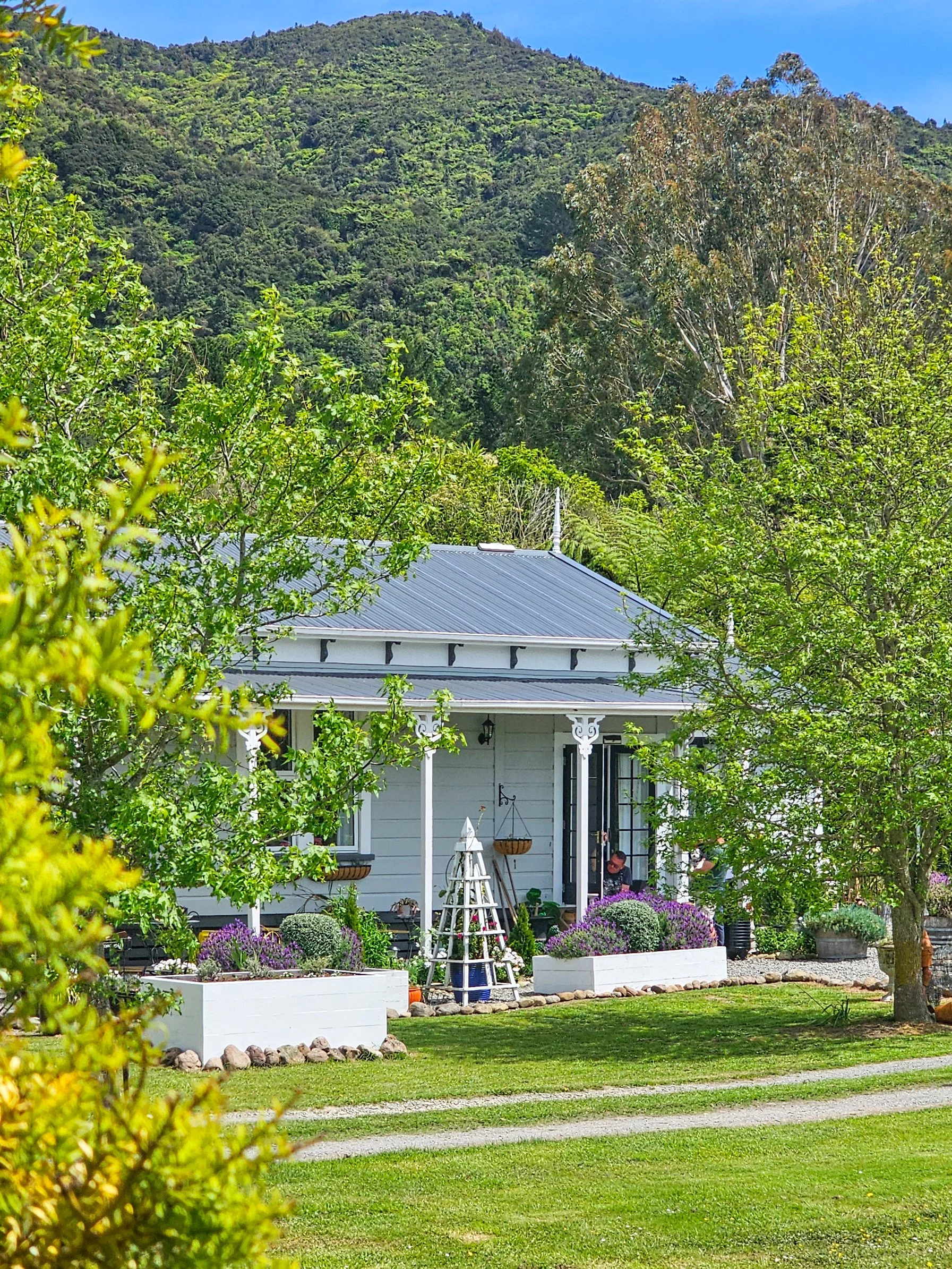
If several of the houses and gardens of the 2026 House and Garden tour have a view of the Tararuas, Waiohine Valley Road has the hills as an immediate backdrop. Tucked between the range and the Waiohine River, the property hunkers down into a sheltered bowl afforded a microclimate that, amongst other things, fosters enduring survival of passion fruit and tamarillos, untroubled by frost. Approached by a juvenile avenue of London planes, in spring pungent with marauding broom, you come upon a garden that’s part hard work, part gardener’s passion and part eccentricity. It’s truly a rural garden, remote from immediate neighbours where the water supply is gravity fed from the heights behind. A small “transplaced” 19th century cottage from Palmerston North, agog with collections, oil-painted landscapes and what must be a record collection of portraits of sparrows, sits on the periphery. The outdoors is punctuated by beds of roses, dahlias, star jasmine on obelisks, citrus, apricots, cherries, a youthful arboretum and hives of industrious bees. They, the bees, and the river, remind you that gardens are about sound as well as sight and scent. Then there’s the elephant house (although never an elephant)….
Elmwood,
46 Kuratawhiti Street
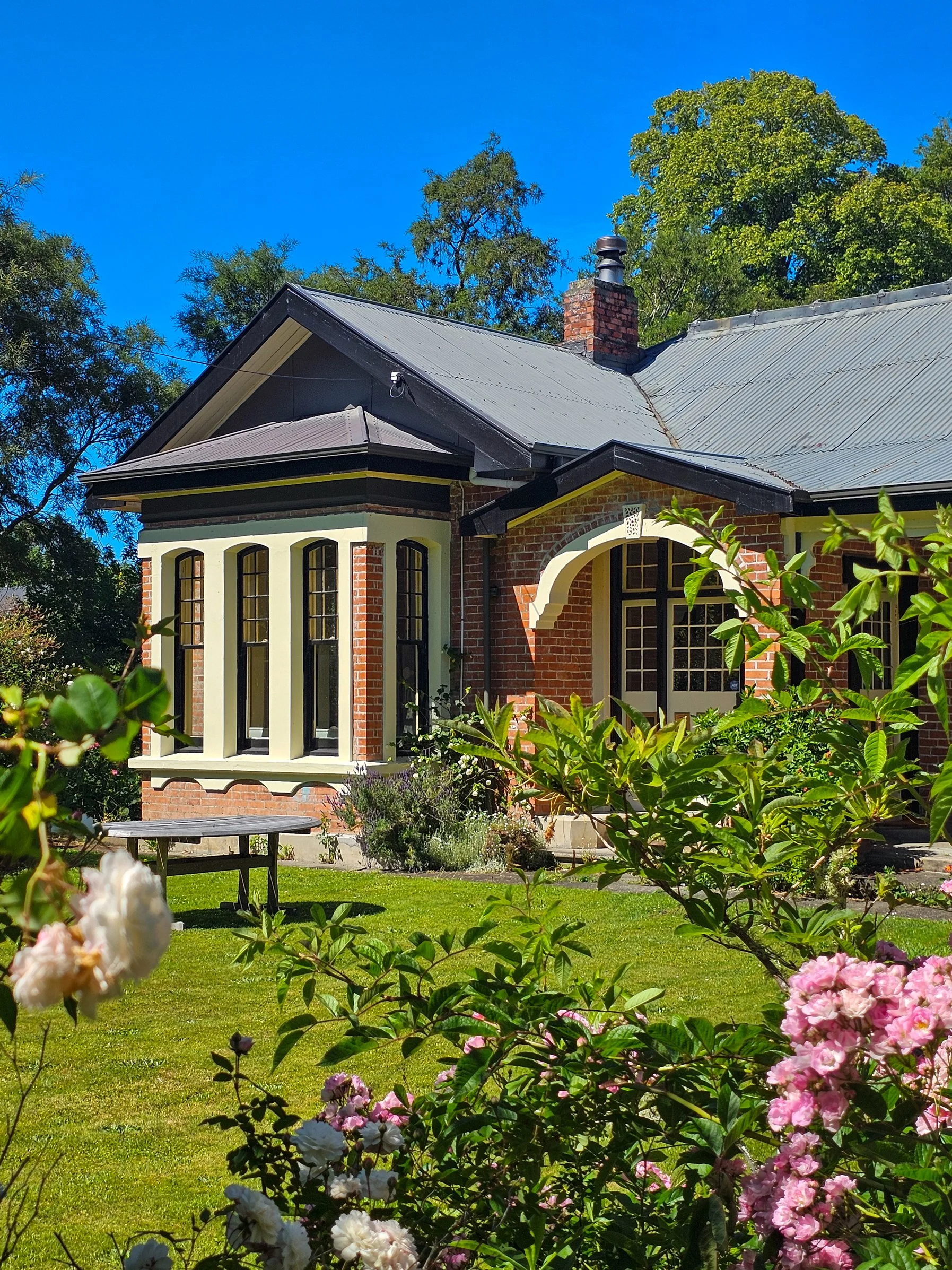
If yours was a mid-century childhood, then this garden will sing from your picture books. Planted in the 1940s by Greytown’s ubiquitous Mrs (Barbara) Thompson, it was designed and planted to be synchronic with the late Victorian brick bungalow that anchors the site. Although the house is not open for this tour, its presence charms – redolent of Tea-Planter-India with verandahs and gables and that reassuring mix of longing for an almost elusive past with here-and-now permanence. The garden is rich with legacy planting of acers, rhododendrons, magnolia, hydrangeas, sunflowers, hollyhocks, poppies, foxgloves, anemones. It is seductively untampered with, layered by time. A judas tree, storm damaged several times, tenaciously branches out in an arterial journey buoyed by built supports. In spring the deep border squelch with carpets of bulbs including exuberantly naturalised bluebells. The considerable stump of a long-gone-tree near the house is the legacy of Maata Maupuka, one time resident, who planted a Copper Beech to commemorate the birth of her child. The tree is embedded in Greytown history for it is thought to be the parent of the Copper Beech on Greytown’s Main Street. This is not a self-consciously wrought heritage garden. It lives its history, abiding and unashamedly mellow.
The Saddlery,
174 Main Street
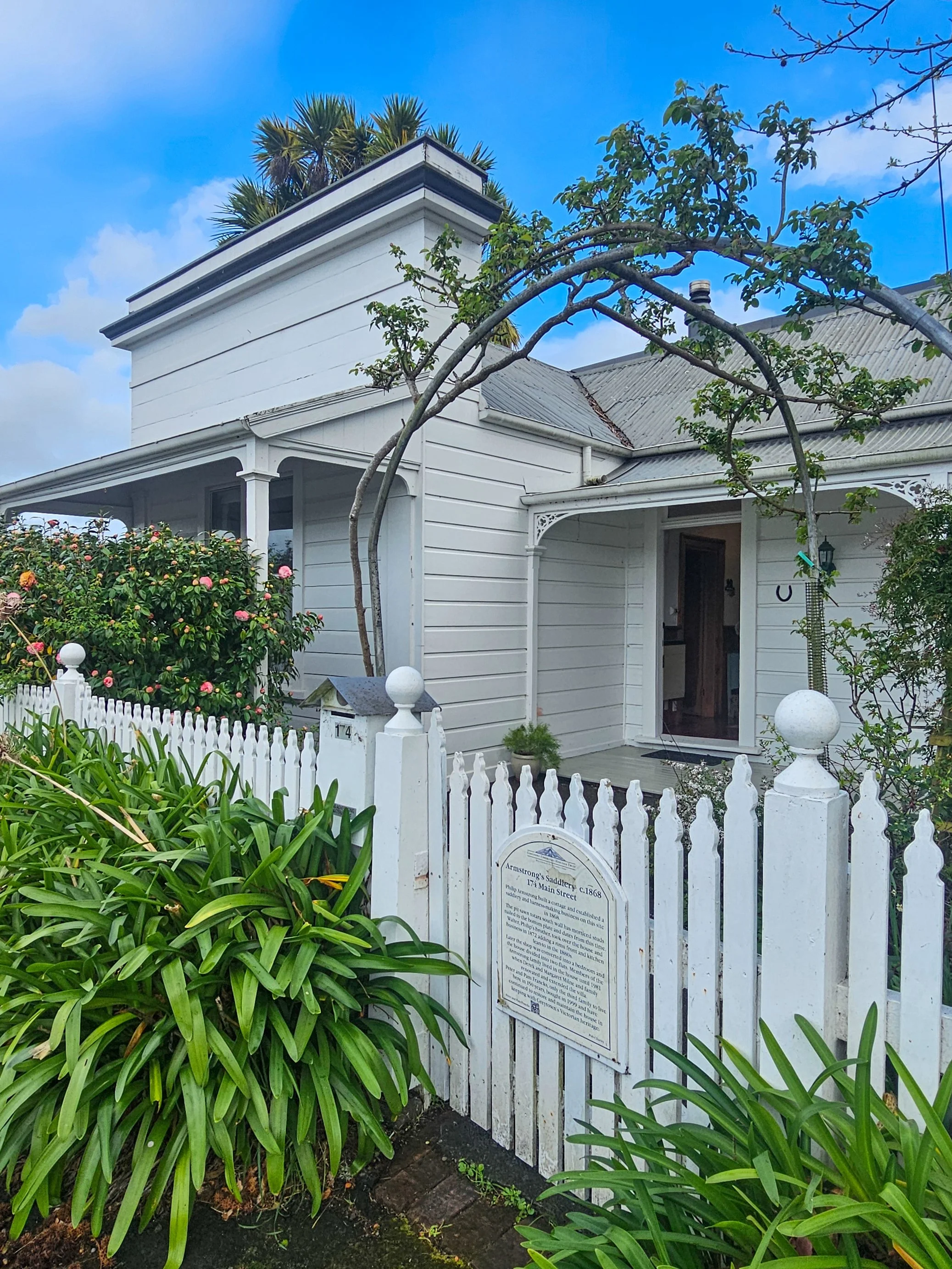
As high fences become “a thing”, street appeal gets to be less evident. However, The Saddlery does street appeal with panache and offers up the most glorious façade to those that pass by or pause. A paling fence, fretwork verandah, camellia, daphne, jasmine, lavender; this is 1868 assaulting your senses. One part of the street-front sports a once-upon-a-time shop which inside becomes a bedroom for the guest house that is a livelihood of the owners. The Saddlery was just what it says on the tin – a one-time provider of saddles and tackle from what is one of Greytown’s oldest buildings. The main villa is divided by the spine of a hallway, social rooms falling to one side and accommodation to the other. The corridor culminates in a huge kitchen, wrangled from a careful budget, that allows a cooking-oriented owner space to slice, stir, steep and stew. Reviews of the guest house praise the home produce that visitors take away. The garden is a family affair - not so much in its care but in its pleasure. Celebrations gather here. Christmas, weddings and simply gatherings. A large pergola forms a shade and around the perimeter of the garden an ancient walnut, silver birches, a listed notable Liquid Amber, a native Beech tree. This is a house and garden loved by its owners and saturated in its history.
Hellebore House,
58a Jellicoe Street
Long approaches to a house and garden are always beguiling. This one, bordered by the hellebores that give the place its name, does not disappoint. Arrival brings you to the gable end of the house and what once would have been a simple Greytown cottage, moved from nearby McMaster Street. Subsequently, much extended, the current owners have chosen to stay strongly within heritage idiom. The house is intensely romantic, both inside and out. The house now orients to look across the garden – a sweeping lawn, hornbeam hedging, a heritage white cherry blossom, a chestnut and perhaps the piece de resistance, a magnificently tortured plum tree that stands defiantly against time and fashion. The long verandah of the house hosts two white wisteria which one day will fully fringe the façade. The building carries barge boards that are punctured with cut-out trefoils, soft clover forms rather than gothic points. Pillared roses are topiaried to cascade. Beech is growing in a block to offer a foil to lion statuary. White camellia consciously sharpens the crips, conservative palate. Indoors the palate is soft and quietly muted without being silent. It is almost dreamy. Reoriented stairs take you to a principal bedroom and ensuite bathroom, the treads shallow and of their period. A hall table is home to three small shoes (now framed) found in the “front room” wall when the house was renovated in the early 1980’s; the encasement of a child’s shoes in building cavities was a strong ritual thought to either ward off the presence of evil or to nurture fertility. Hellebore House so evidently spirits up the past to find a present voice.
The Vicarage,
201B Kuratawhiti Street
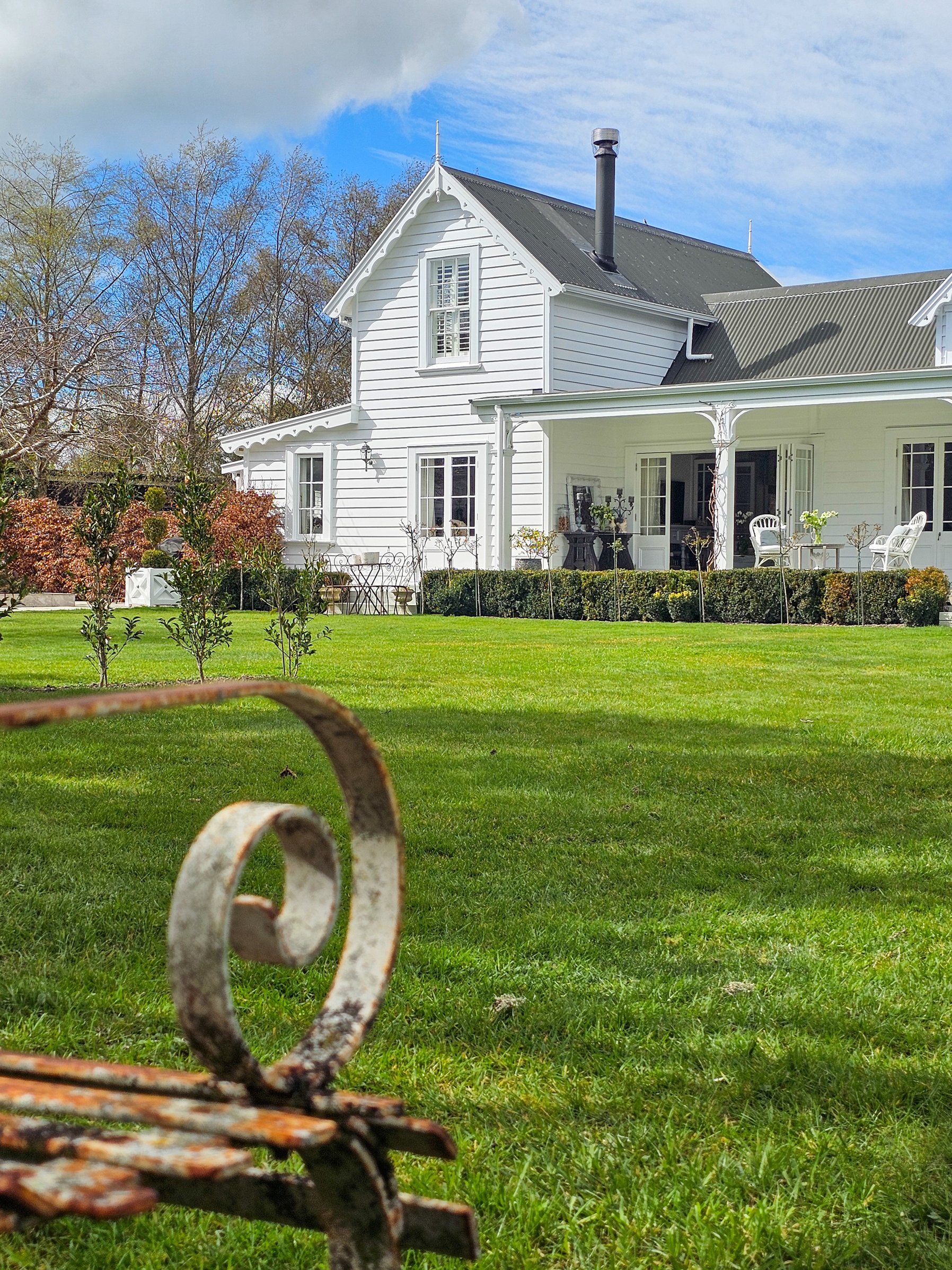
An urban Vicarage that became a country home. The grand, crumpled-hill forms of the Tararuas seem to be at arm’s length from the galleried verandah of this building. Give or take the paddocks and grazing livestock in between. A nineteenth century urban building with later Edwardian additions, the two-storeyed house was moved from Masterton to Greytown and is in the throes of renovation and restoration. The bulk of this is done and there’s enough undone to make this tour visit exceptionally interesting. The building can be seen in process rather than a finished trompe l’oeil. There’s no sleight of hand here - the work is laid bare, the vision immediately available. The subject of Clark Gayford’s musing on Moving Houses, many will be fascinated to see how six pieces of heritage house have reunited to feel very grounded in a rural landscape.
Longforde,
201 Kuratawhiti Street
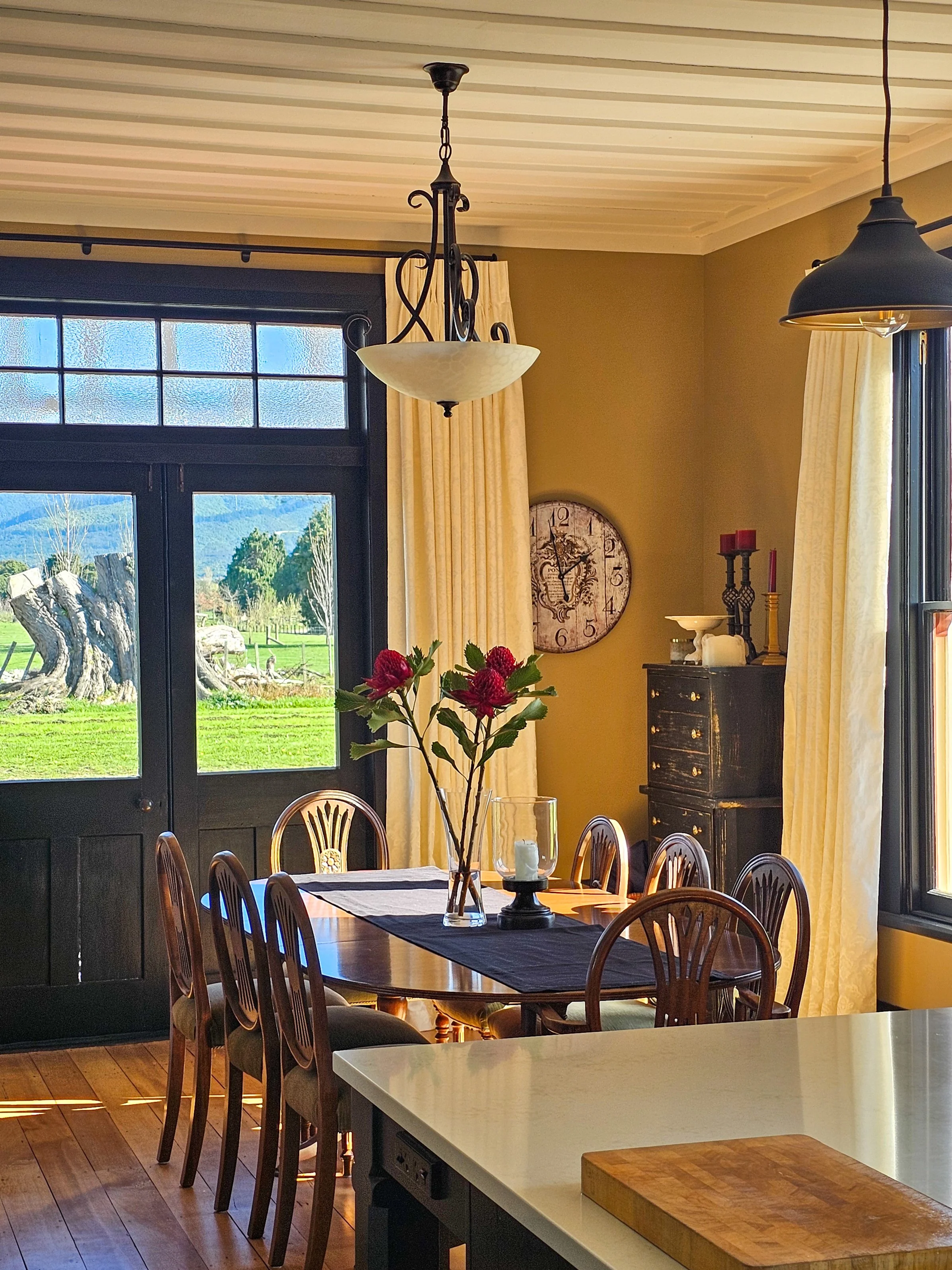
Big strokes. Planting and interiors share a robust eye and hand. The setting is pastoral and bunkered by the Tararuas – a range of hills whose moods are as varied as the Wairarapa weather. Two cottages, one original (19th century) and one an Edwardian migrant from Masterton, sit low and white amid two gnarled walnut trees. Garden designers Lyn Eglinton and Hamish Moorhead have reshaped a paddock or two to become a rural garden. Stables have become a destination café, interiors have borrowed from the south of France – earthenware and linen, no-nonsense and joyful in their texture and colour. Longforde is a glorious marriage of imagination and skill, of places once lived and wed together here to embed a strong statement about home.
28 Kempton Street,
Greytown
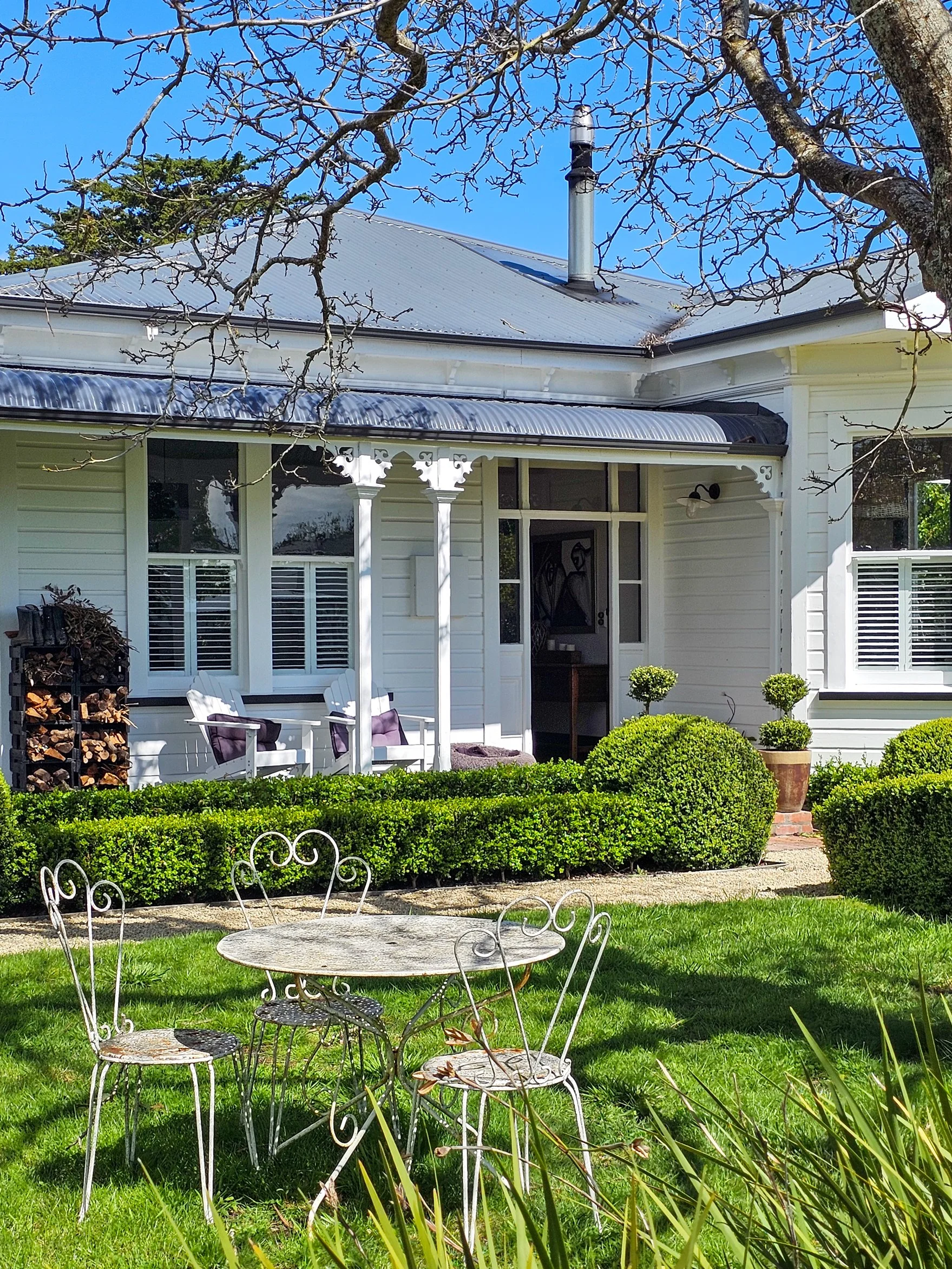
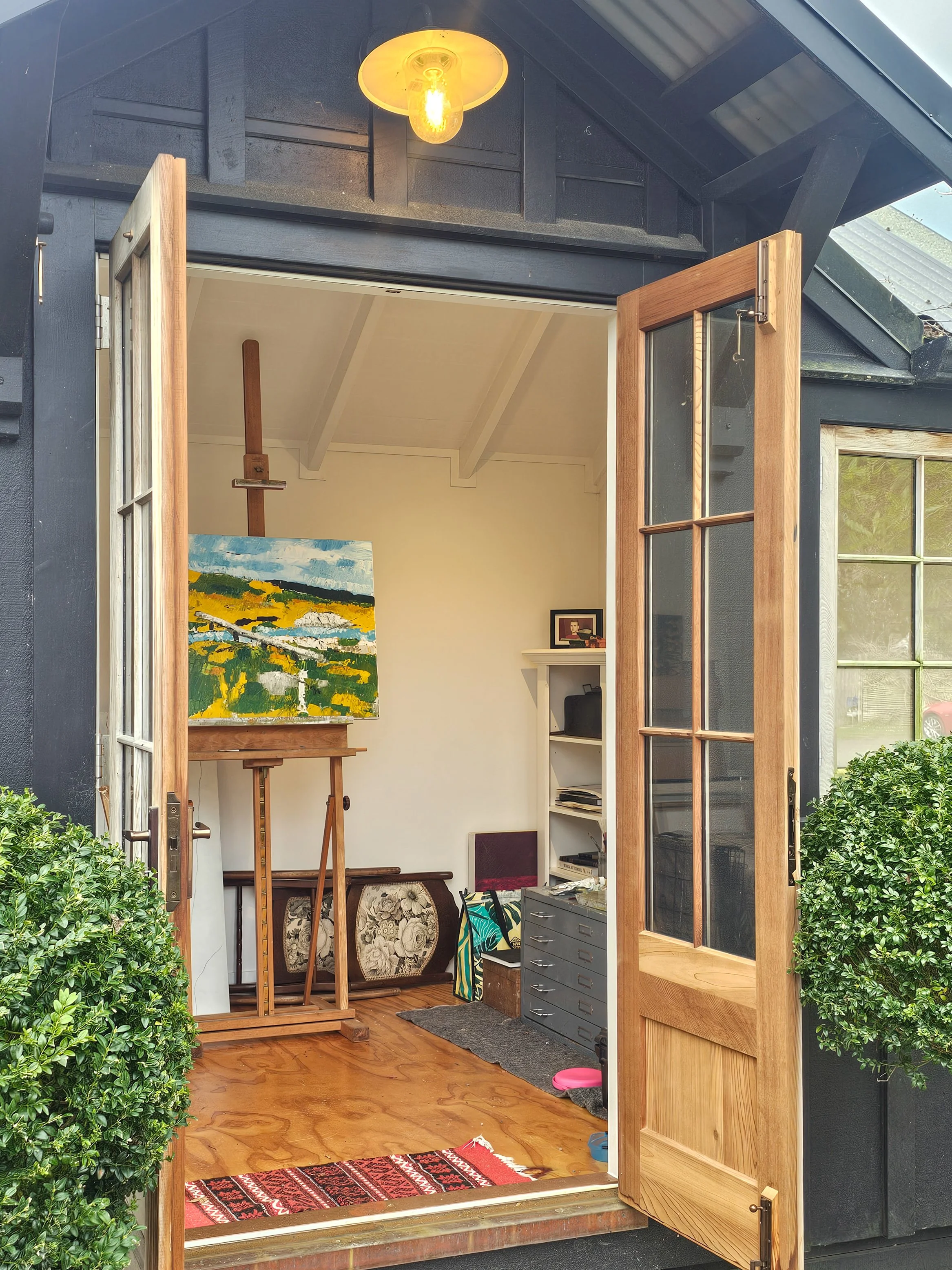
Moved from a site on Greytown’s Main Street, this small cottage is an exercise in giving a house a sense of permanence and place. Part of the success is that the building was sidled on to the site behind a large and mature maple which gives an air of endurance; surely it was planted after the construction of the cottage? The building, a soft-ochre pebble-dash-stucco, is counterpointed by shingles and small-paned timber joinery. Totara and rimu were used extensively. The garden, richly green, anchors it in the streetscape and gives it a sense of privacy. The house is sensitively furnished. Nothing shows off, but shows well. The artist owners are thoughtful about how art and objects talk to the spaces, relish the backstories that everything carries. Nothing here found its way across the threshold for simply being a “thing” – everything came because it is a story.
8 Wood Street,
Greytown
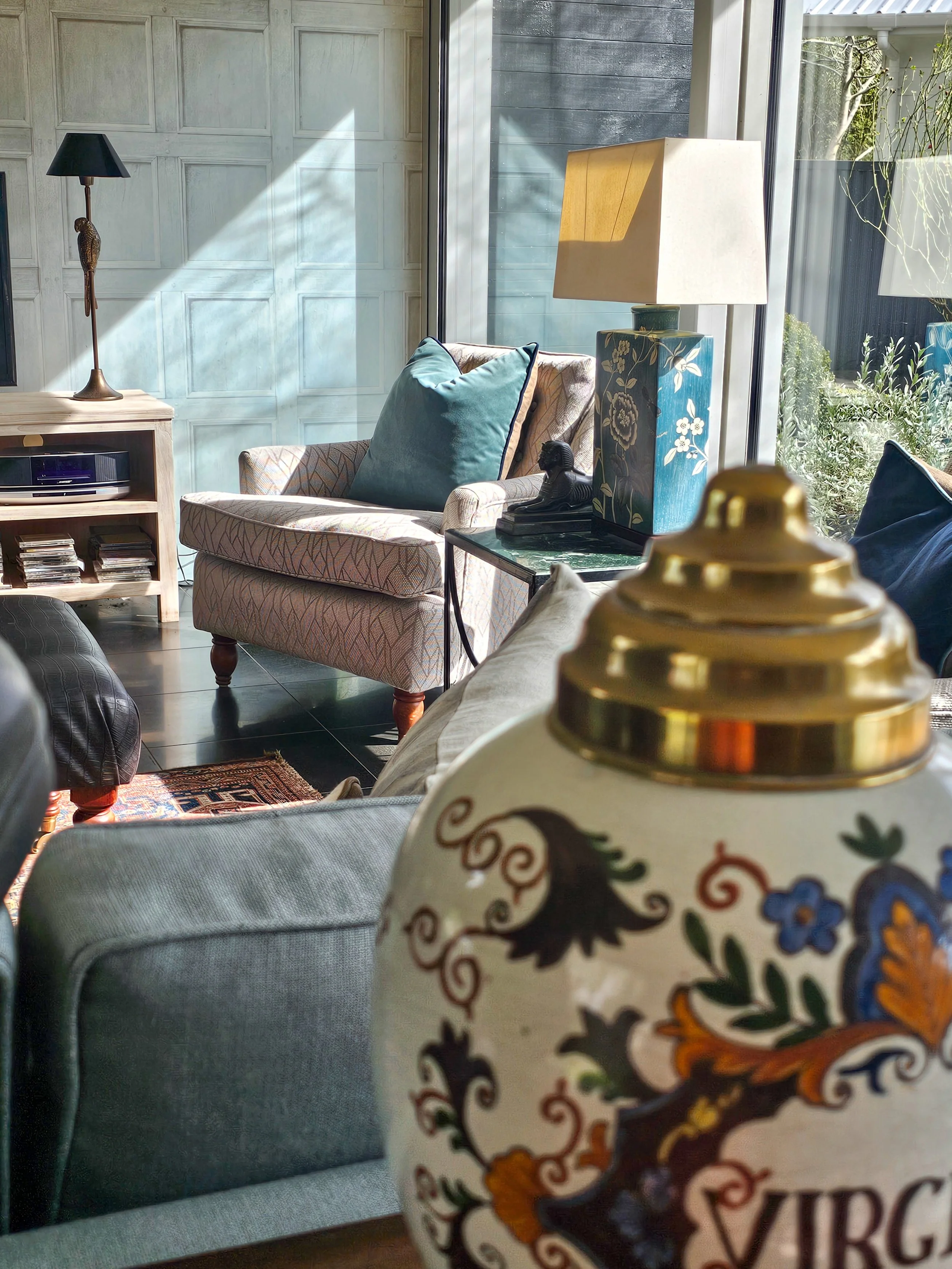
Walking by 8 Wood Street you might simply acknowledge a handsome bungalow of its era’s idiom. It makes benign demands of you. What you see is a California bungalow, its sand-coloured stucco sitting modestly in its landscape. What is there is, in fact, so much more. A garden with snatches of formality, trees that define the romance and season of the site, the surprise of a swimming pool. However, it’s the interiors of the house that rally a big response. The original structure not much changed but is dressed in a livery that reflects a life lived internationally by its owner – art and furnishings gathered up as she and her husband rolled on, finally settling in Greytown. Napoleon’s gravitas, Shakespeare’s dignity, Hogarth’s abrasive reality; these are all household companions. The astonishment is the back of the house which turns that elevation to be the point of arrival – a pavilion extension that blows away architectural cobwebs; if you can be very smart yet very relaxed, this house does just that.
Ardloman,
37 Kempton Street, Greytown
There’s delight in approaching a house that is so self-effacing, an early Edwardian cottage soberly tucked into a residential street, to find interiors that run into one another with not a moment of collision yet managing to remain distinct. An art collection dominated by greys and blues, and greens and creams, often of subjects whose focus is never us, serves to unify the mood of this very charming home. It’s a home that’s painstakingly considered and carefully brought together but that never tries too hard. The owner, an academic, is also a fastidious seamstress; this informs her passion and discernment for high-end fabrics that clothe windows and soft furnishings. You are enveloped very comfortably in a house that, while recently renovated, was forever like this.